The Business Diplomat: Mirshod Shakirov’s Bet on the Trillion-Dollar New Silk Road
A son of Bukhara turned “business diplomat” is building the institution the trillion-dollar New Silk Road has been missing — the human infrastructure for an 80-million-person market now being wired between China, Central Asia and Europe

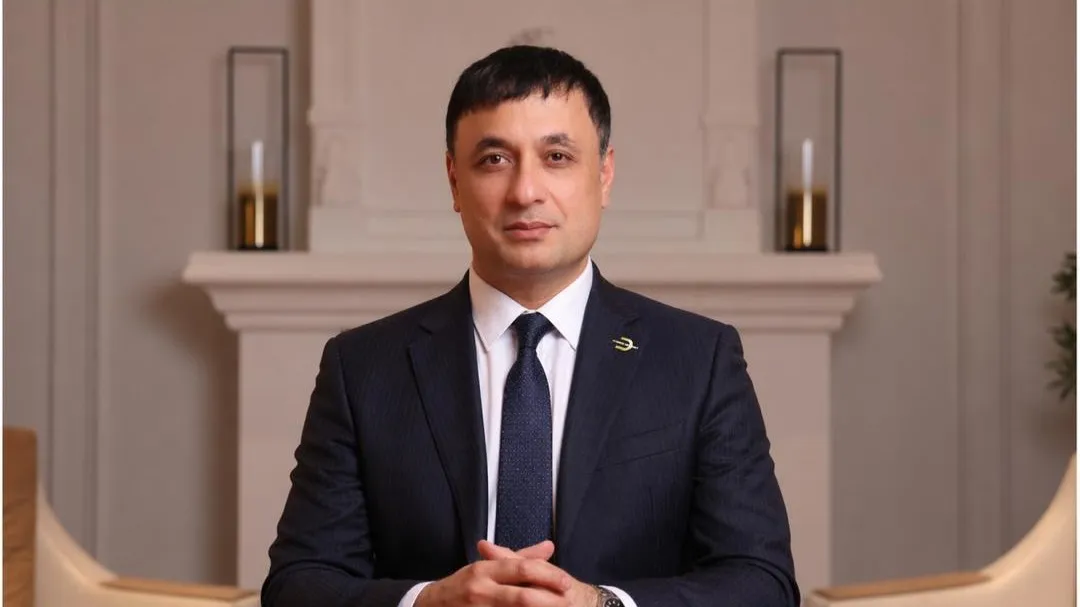
Bukhara teaches a particular kind of literacy. For two thousand years the city sat where the caravans crossed — Persian poetry on one street, Turkic commerce on the next, Russian administration layered over both, and, somewhere in the madrasas, the older idea that a deal and a diplomacy are the same craft. Mirshod Shakirov grew up inside that inheritance. By the time he left, he carried five languages — English, Russian and Persian among them — and an instinct that would later harden into a business model: that the person who can move between worlds is worth more than the person who can dominate only one.
What he did not yet know was that the road outside his childhood would become, within his own working life, one of the most contested pieces of economic geography on the planet. Today Shakirov is the Founder and President of Business Diplomat, a Washington-registered institution he describes as the world's first practitioner-led "think-do tank" for the modern Silk Road. To understand why that sentence is more than branding, you have to start not with the man but with the road.

The New Silk Road is not nostalgia; it is the largest redrawing of Eurasian trade in a generation. China’s Belt and Road Initiative, its spine, has drawn cumulative engagement of roughly 1.4 trillion dollars across about 150 countries since 2013. The figures closer to Shakirov’s home are growing just as fast: China’s trade with the five Central Asian states hit a record 94.8 billion dollars in 2024, up from 89.4 billion the year before, with Kazakhstan alone accounting for 43.8 billion. Geography explains the cast. After 2022, when war and sanctions made the old northern route through Russia untenable for Western trade, the countries long treated as buffer states suddenly found themselves holding the map.
That map now has a name: the Middle Corridor, the Trans-Caspian International Transport Route that carries goods from China through Kazakhstan, across the Caspian Sea to Azerbaijan and Georgia, on through Türkiye and into the European Union — bypassing Russia entirely. A 2023 World Bank assessment concluded that, with the right investment, freight on the corridor could triple to 11 million tonnes and transit times could be cut in half by 2030. Europe is wagering accordingly. At the first-ever EU–Central Asia summit, held in Samarkand in April 2025, Brussels unveiled a 12-billion-euro Global Gateway package for the region — three billion of it for transport — on top of some 10 billion euros already mobilised for the Trans-Caspian route, a 4,250-kilometre rail-and-sea line engineered to move cargo from China to Europe in fifteen days.
Behind the logistics sits a real economy, and a young one. The five Central Asian republics — Kazakhstan, Uzbekistan, Turkmenistan, Kyrgyzstan and Tajikistan — together produce on the order of half a trillion dollars a year and are home to more than 80 million people, a combined output that has roughly quadrupled since 2000 and expanded at close to 7 percent a year for two decades [5]. Kazakhstan is the keystone: at about 260 billion dollars, its economy is larger than the other four combined [6]. Uzbekistan, the most populous at some 37 million, has spent the years since 2016 prying open one of the world’s more closed economies. This is the scale and the scope Business Diplomat has placed itself around — not a frontier, but a fast-growing market of more than 80 million producers wedged between two of the largest trading blocs on earth, finally building the routes to reach them.
“For two thousand years my region was where the world’s roads crossed — we were the centre, not the edge. The New Silk Road is that map coming back to life — and the people who live along it will be a market, a voice and a power of their own.”
That institution is his answer to a gap the money has not yet closed. Capital is pouring into rails, ports and pipelines; what the corridor lacks is the human infrastructure — the people who can walk a founder from Tashkent or Almaty into a boardroom in London or a ministry in Brussels and make the introduction hold. Shakirov gave that missing capability a name. He calls it business diplomacy.
“We are not another accelerator and we are not another think tank. A think tank writes and a programme trains; we were built to do both — on the same corridor, for the same founders. Business Diplomat exists so that a founder from the emerging world can enter any market on earth as an equal, with a strategy in one hand and their integrity in the other,” Shakirov says.
If Bukhara gave him his instinct, the West has given him an amplifier.
For the United Kingdom and Europe, Business Diplomat is supported by Arif Anis MBE, who serves as a senior strategic advisor to the institution. A British author, leadership expert and USA Today and Wall Street Journal bestselling writer of Pakistani heritage, whose own work has carried him into the company of figures from King Charles III to Bill Clinton and a succession of prime ministers.
As Business Diplomat continues its global expansion, Anis has become one of the institution's most prominent advisors, helping strengthen its international positioning and engagement strategy.
“I have spent my life around leaders and the institutions they build, and I had not seen anyone holding this ground,” says Anis. “Business Diplomat is the first institution to treat the founder from the emerging world as a diplomat in their own right — not a guest at someone else’s table. That is precisely why it travels. The need is identical in Lahore, Almaty, Lagos and London, and nobody else is meeting it at an institutional level.”
Shakirov’s own qualification for the role was forged early. In 2009, as a young man, he took up a placement at the United Nations in New York, inside the Department of General Assembly Affairs — the administrative engine room of the most concentrated gathering of heads of state on earth. By his own account,
it was there, in the corridors around the General Assembly, that he observed international leadership at close quarters, including the work of then Secretary General Ban Ki-moon and leaders such as Barack Obama, Bill Clinton, Nicolas Sarkozy and Gordon Brown at close range. The seventeen years that followed were the apprenticeship: trained in law, seasoned in supply chain, operating across the United Kingdom, the United States, Uzbekistan and Singapore. He noticed a pattern the data now bears out — the post-Soviet world produces founders in extraordinary numbers, more than 120,000 of CIS origin in OECD markets alone by EBRD and Atlantic Council estimates, multilingual and ambitious yet chronically short of the institutional bridge between their commercial ambition and the policy worlds they must cross.
“A founder from Tashkent or Almaty can build a brilliant company and still be invisible to the rooms where the rules are written. Business diplomacy is how you walk into those rooms — and how you remain welcome once you are inside,” he says.
Kazakhstan, the corridor’s logistical keystone and China’s largest regional trade partner, is where Shakirov has moved first. The backdrop helps: Kazakhstan has pulled the Caspian’s capital and freight toward Almaty, while a 2025 On Think Tanks survey of the region describes a think-tank ecosystem that is sparse, largely state-controlled, and almost entirely missing a practitioner’s voice. In 2025 Shakirov delivered a keynote at the PARASAT Forum in Shymkent and forged a partnership with the PARASAT Business Club; Almaty is earmarked as a regional hub and a Business Diplomat Kazakhstan chapter sits on the roadmap. For a Kazakh reader, this is not a foreign operator parachuting in for a photograph; it is a neighbour building in the open, in the country’s second city, alongside a local partner.
“Diplomacy and ethics are not the brakes on ambition. On this road, they are the vehicle. Trust is the only currency that crosses every border without an exchange rate — and an institution that teaches founders to earn it is worth more to this region than any single deal,” Shakirov says.
The institution itself is engineered, not improvised. Business Diplomat Headquarters Corp is registered as a non-profit in Washington, DC, and Shakirov has designed it around three arms most of his peers keep apart. A Do arm runs the Academy — a five-level curriculum that climbs from foundational cross-border practice to a Certified Business Diplomat credential — alongside corporate trade missions along the corridor. A Think arm produces the research: flagship reports and working papers meant to become the reference literature for the corridor’s founder economy. And a Convene arm builds the connective tissue — a Practitioner Fellowship modelled on bodies such as RUSI and RIBA, a network of national chapters, and a planned annual Bukhara Forum that Shakirov clearly means to grow into a Davos of the New Silk Road. The positioning is precise: not out-researching Chatham House or out-selecting Endeavor, but claiming the empty quadrant where practitioner credibility, a “think-do” mandate and the modern Silk Road intersect — a space its own competitive mapping finds unoccupied by any of a dozen credible incumbents.
If there is a single tell that Shakirov is building for permanence, it is the institutional voice. Business Diplomat is designed to publish — to put a State of the Silk Road Founder into the form of an annual benchmark, to issue working papers that ministries and sovereign funds can cite, to convert one practitioner’s hard-won pattern recognition into a body of work that outlasts any single engagement. In a category nobody else owns, the institution that defines the vocabulary ends up owning the conversation. A book is coming, too — The Business Diplomat: From Bukhara to the Boardroom — and the title is the whole story in six words. The boy who learned to read a caravan city is now writing the manual for the corridor’s next generation, betting, with Anis alongside him in the West, that the new roads will be held together the way the old ones were: by those who can carry value across borders without losing it in translation.